

Salesforce Partner UK: A Practical Guide to Choosing the Right One
Selecting the right salesforce partner in the UK has never been more critical for businesses seeking to maximise their CRM investment. With Salesforce's recent consolidation of its UK headquarters and AI Centre into a single London campus, the landscape of partnership opportunities has evolved dramatically. British organisations now face a complex decision: choosing from hundreds of certified partners, each promising transformative results. The difference between a successful implementation and a costly failure often comes down to selecting a consultancy that understands both the platform's technical capabilities and your specific business challenges.
Understanding the Salesforce Partner Ecosystem
For years, "what tier is your Salesforce partner" was a reasonable question with a reassuringly complicated answer. Registered, Silver, Gold, Platinum. Then Base, Ridge, Crest, Summit. In March 2026, Salesforce scrapped the four-tier system entirely. What's left is two tiers: Select and Summit. Not a rebrand — a different way of deciding who's actually good.
The old system rewarded volume. Enough certifications, enough deals closed, and you'd climb the ladder, with little requirement to show any of it translated into a client getting value. We've sat across the table from plenty of clients whose previous Gold and Platinum partners' badges said more about their sales team than their delivery team.
The new system asks a blunter question: did the work land? Advancement runs on customer satisfaction scores, documented outcomes, and verified competency — 28 of them now, replacing a sprawl of roughly 170 badges, most weighted toward Agentforce and Data Cloud.
Select partners have proven they can deliver. Summit partners have proven it under harder conditions — multi-cloud, AI-heavy, regulated, high-stakes for adoption.
Worth saying out loud: a tier tells you about the firm, not the people who'll actually be in your org building things. Ask a partner for their last ten implementations in your industry and size, and how far go-live drifted from scope. That tells you more than any badge.
Still hearing "Gold" or "Platinum" in a pitch deck? Not a red flag on its own. But worth asking why they haven't updated their own positioning yet.
Beyond tier classification, specialisation matters significantly. Some partners focus exclusively on specific industries such as financial services or healthcare, whilst others maintain broad capabilities across sectors. The expansion of the Agentforce 360 platform has added another dimension, with partners now developing custom AI agents and applications.
Industry-specific experience proves particularly valuable when implementing solutions that require regulatory compliance or specialised workflows. A partner with deep knowledge in your sector will anticipate challenges before they arise.
How to choose a Salesforce Partner: Evaluating Technical Competence and Methodology
Technical certifications provide baseline assurance, but implementation methodology separates exceptional partners from average ones. When assessing a UK Salesforce partner, examine their approach to project delivery and risk management.
Proven methodologies should address common failure points:
Requirements gathering that uncovers actual user needs, not just stakeholder assumptions
Architecture planning that ensures scalability and integration with existing systems
Change management strategies that drive genuine user adoption
Quality assurance processes that prevent technical debt accumulation
Post-implementation support that sustains momentum beyond go-live
Understanding strategic decisions for Salesforce implementation helps frame conversations with potential partners. Ask detailed questions about their approach to data migration, custom development versus configuration, and how they handle scope changes during projects.
The process of becoming a Salesforce partner requires meeting specific criteria, but real-world delivery experience matters more than certification counts. Request case studies demonstrating similar implementations to your planned project.
AI Readiness and Future-Proofing Your Investment
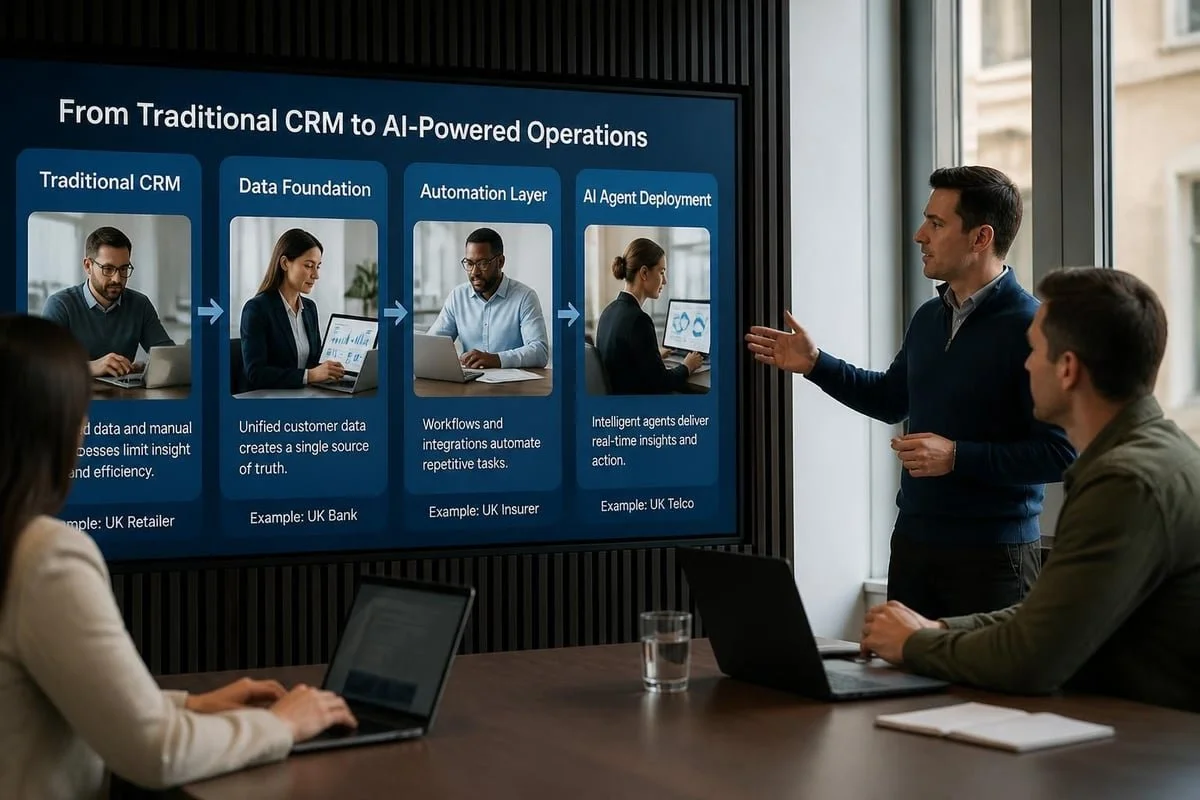
Salesforce's aggressive push toward AI-powered solutions means your chosen Salesforce partner must demonstrate competence beyond traditional CRM implementations. The shift toward what the company calls the "Agentic Enterprise" requires partners who understand both technical AI capabilities and practical business applications.
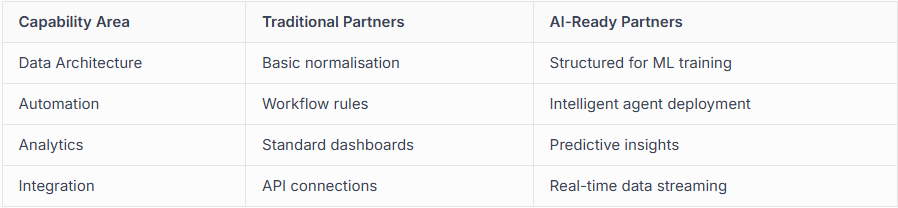
Assessing AI readiness should inform your partner selection criteria. Partners who can bridge current operations with future AI capabilities deliver lasting value rather than solutions requiring immediate replacement.
Industry-Specific Considerations
Different sectors face unique challenges when implementing Salesforce solutions. A Salesforce Partner with vertical expertise brings pre-configured solutions and regulatory knowledge that accelerates delivery.
Financial services requirements:
FCA compliance and audit trail capabilities
Integration with legacy banking systems
Wealth management client portals
Risk assessment and reporting functions
Partners working in financial services understand nuances around data protection, client communication restrictions, and regulatory reporting that general consultancies might overlook.
For organisations in regulated industries, verify that potential partners have successfully navigated compliance requirements similar to yours. Generic implementation experience doesn't translate directly to sectors with strict governance frameworks.
Questions That Reveal Partner Quality
Moving beyond marketing claims requires asking specific questions that expose actual capabilities and working styles. When interviewing a potential UKI Salesforce partner, these queries reveal important distinctions.
Discovery and planning:
How do you handle requirement conflicts between departments?
What's your approach when stakeholders request features that contradict best practices?
How many workshops do you typically conduct before finalising architecture?
Delivery and risk management:
What percentage of your projects finish on the original budget and timeline?
How do you manage scope creep without compromising relationships?
What's your process when discovering unexpected technical constraints mid-project?
Understanding what questions to ask when choosing a partner helps structure your evaluation process. Pay attention to how candidly partners discuss challenges and failures, not just successes.
The best consultancies acknowledge that implementations face inevitable obstacles. Their differentiation comes from how they navigate difficulties whilst maintaining momentum and stakeholder confidence.
Support Models and Long-Term Relationships
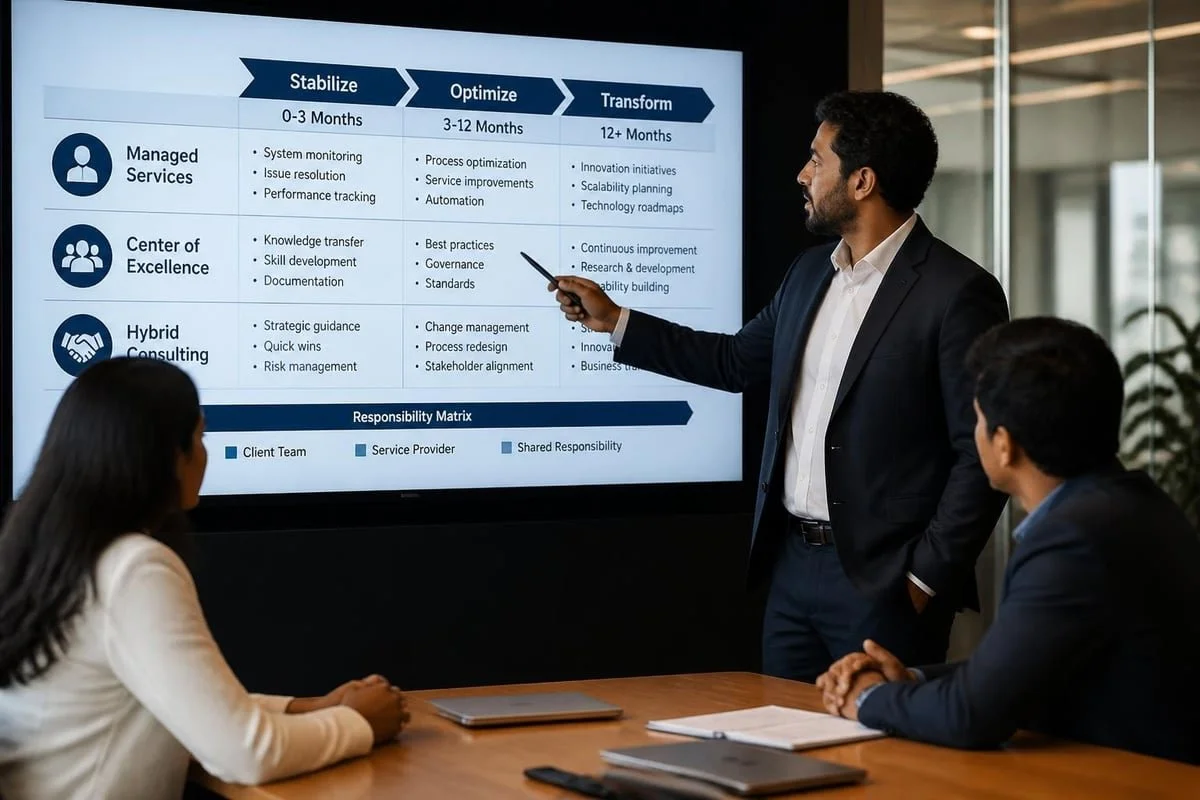
Implementation represents just the beginning of your Salesforce journey. A capable Salesforce partner should offer clear support options that evolve with your needs.
Post-implementation support models vary significantly:
Managed services providing ongoing optimisation and enhancement
Centre of excellence partnerships developing internal capabilities
Hybrid models combining external expertise with team development
On-demand consulting for specific challenges or projects
Exploring Salesforce consultancy options helps clarify which support structure aligns with your organisational capacity and growth plans. Some businesses benefit from comprehensive managed services, whilst others prefer building internal expertise with strategic guidance.
Measuring Partner Performance
Before engaging a UK Salesforce Partner, establishing clear success metrics creates accountability and aligns expectations. Beyond basic project completion, meaningful measurements include user adoption rates, business process improvements, and return on investment.
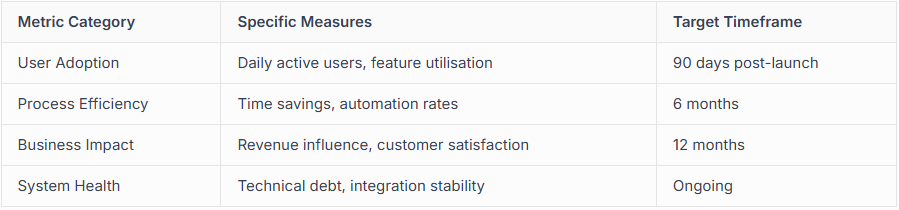
Regular reviews throughout implementation ensure early detection of divergence from objectives. Quarterly business reviews should assess both technical progress and alignment with strategic goals, not just task completion percentages.
FAQ
What's the difference between Select and Summit partners?
Select partners have proven they can deliver solid, well-scoped Salesforce projects. Summit partners have proven it under harder conditions: multi-cloud, AI-heavy, regulated, high-stakes for adoption. Neither tells you which specific people will be working on your project, though. Ask for that separately.
Do Gold and Platinum partner badges still mean anything?
Not officially. Salesforce retired the old four-tier system (Registered, Silver, Gold, Platinum, later Base, Ridge, Crest, Summit) in March 2026. If a partner is still leading with a Platinum badge, ask when they last checked their own program status.
How long does a Salesforce implementation take?
Depends on scope, but a well-run mid-market project typically runs 8 to 16 weeks from kickoff to go-live. Longer if you're doing a phased rollout across multiple business units. Anyone quoting you a number without asking about your integrations first isn't giving you a real estimate.
What questions should I ask before choosing a partner?
Skip "what's your tier." Ask for their last ten implementations in your industry and company size, and how far the actual go-live date drifted from the original scope. That answer tells you more about delivery reality than any certification count.
Does a partner need industry-specific experience?
It helps more than people expect. A partner who's built for financial services already understands FCA reporting, client communication restrictions, and the data handling questions that come up mid-project. Generic implementation experience doesn't always transfer cleanly into regulated sectors.
What happens after go-live?
This is where most implementations run into trouble. The system goes live, the partner moves on, and nobody's tracking whether it's actually delivering value six months later. Look for a partner who builds a post-go-live review into the engagement, not as an add-on.
Selecting the right Salesforce Partner across the UK and Ireland fundamentally shapes your CRM success trajectory, influencing everything from user adoption to long-term scalability. The decision requires balancing technical expertise, industry knowledge, implementation methodology, and cultural fit with your organisation.
capeMBX employs our proven BEACON philosophy to deliver clean, scalable implementations that transform Salesforce platforms into robust engines for business growth, ensuring your investment delivers measurable results and sustainable competitive advantages.
