

Slackbot: Your AI-Powered Workplace Assistant for 2026
Agentic AI is still the talk of the town. Most, if not all, organisations require intelligent tools that streamline communication whilst reducing manual tasks. Slackbot has emerged as a powerful AI-driven assistant within the Slack ecosystem, offering personalised support that enhances productivity across teams.
For Salesforce consultancies and their clients, understanding how to leverage this technology effectively can transform daily operations and create seamless integration between communication platforms and CRM systems. As businesses increasingly adopt AI-ready solutions, Slackbot represents a practical entry point for organisations seeking to optimise their digital infrastructure without overwhelming their teams.
Understanding Slackbot's Core Capabilities
Slackbot serves as your personal assistant within Slack, providing instant answers, automating routine tasks, and facilitating smoother workflows. Unlike generic chatbots, this intelligent agent learns from your workspace patterns and adapts to your organisation's specific needs.
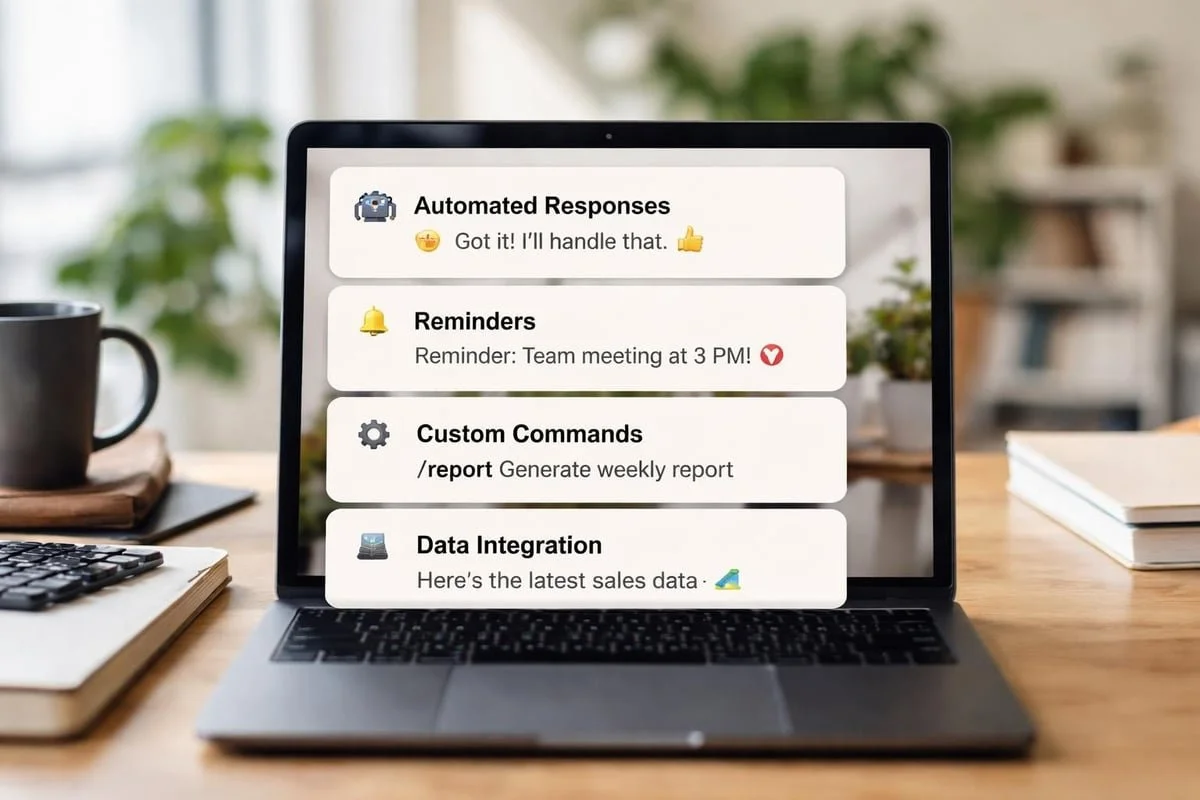
The platform offers several foundational features that benefit Salesforce users particularly well:
Automated responses to frequently asked questions, reducing support ticket volume
Custom reminders for critical CRM tasks and follow-ups
Quick access to company resources and documentation
Personalised notifications based on user roles and responsibilities
Workflow triggers that connect Slack conversations to Salesforce actions
Integration with Salesforce Ecosystems
For organisations running Salesforce implementations, Salesforce's Slackbot integration creates a unified experience where CRM data flows directly from the Salesforce platform into team conversations. This integration proves particularly valuable when managing complex customer relationships or coordinating service delivery.
When properly configured, Slackbot can retrieve customer records, update opportunity statuses, and trigger automated workflows without requiring users to switch between platforms. This seamless connectivity aligns perfectly with automation in Salesforce, creating efficient processes that reduce manual data entry and improve accuracy.
Implementing Slackbot in Your Organisation
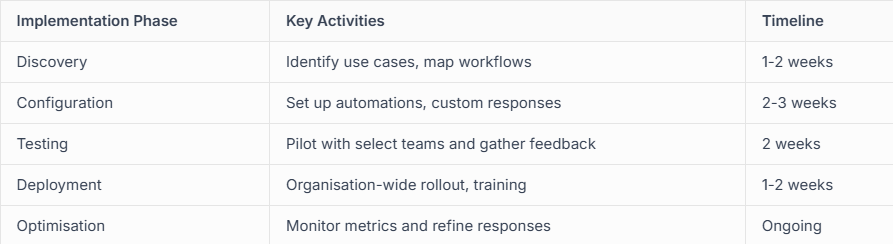
Successful Slackbot deployment requires strategic planning and clear objectives. Organisations must define specific use cases before configuration begins, ensuring the tool addresses genuine business needs rather than simply adding another technology layer.
Step-by-Step Configuration Process
Assess your communication patterns to identify repetitive queries and manual processes
Define custom responses for frequently asked questions specific to your industry
Establish workflow automations that connect Slack activities to Salesforce records
Train your team on best practices for interacting with Slackbot
Monitor usage metrics to refine and optimise performance over time
Learning how to use Slackbot effectively requires understanding both technical configuration and change management principles. The most successful implementations occur when organisations treat Slackbot deployment as part of broader Salesforce CRM implementation services, ensuring consistency across platforms.
Maximising Value Through Custom Development
Whilst standard Slackbot features deliver immediate benefits, custom development unlocks the platform's full potential. Organisations with specific workflow requirements can build tailored solutions that address unique business challenges.
Building Custom Slackbot Applications
Development approaches vary based on technical capabilities and business requirements. Technical tutorials demonstrate how to create custom Slackbots using popular programming languages, whilst no-code platforms enable business users to configure sophisticated automations independently.
Custom Slackbot development might include:
Client-Facing Solutions:
Automated status updates for project milestones
Real-time notifications when Salesforce records meet specific criteria
Interactive dashboards accessible directly within Slack channels
Internal Efficiency Tools:
Streamlined resource allocation based on project requirements
Automated time tracking linked to Salesforce project records
Knowledge base integration for faster problem resolution
The key lies in aligning Slackbot capabilities with your organisation's broader digital strategy. Much like choosing a Salesforce partner, selecting the right development approach requires understanding both immediate needs and long-term scalability requirements.
Best Practices for Enterprise Adoption
As TechRadar reports, Slackbot represents more than another AI assistant - it functions as a gateway to agentic enterprise capabilities. This positioning requires thoughtful governance and clear usage guidelines.
Establishing Governance Frameworks
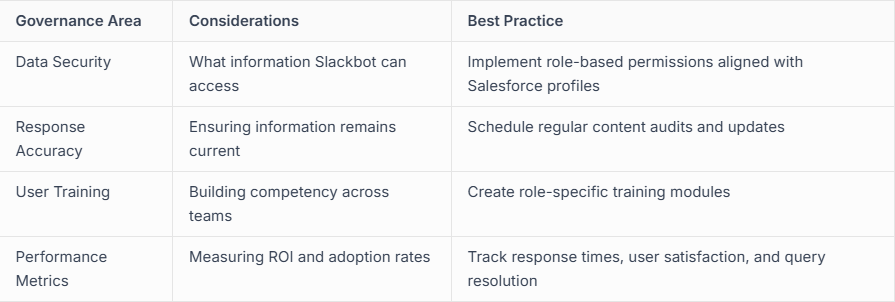
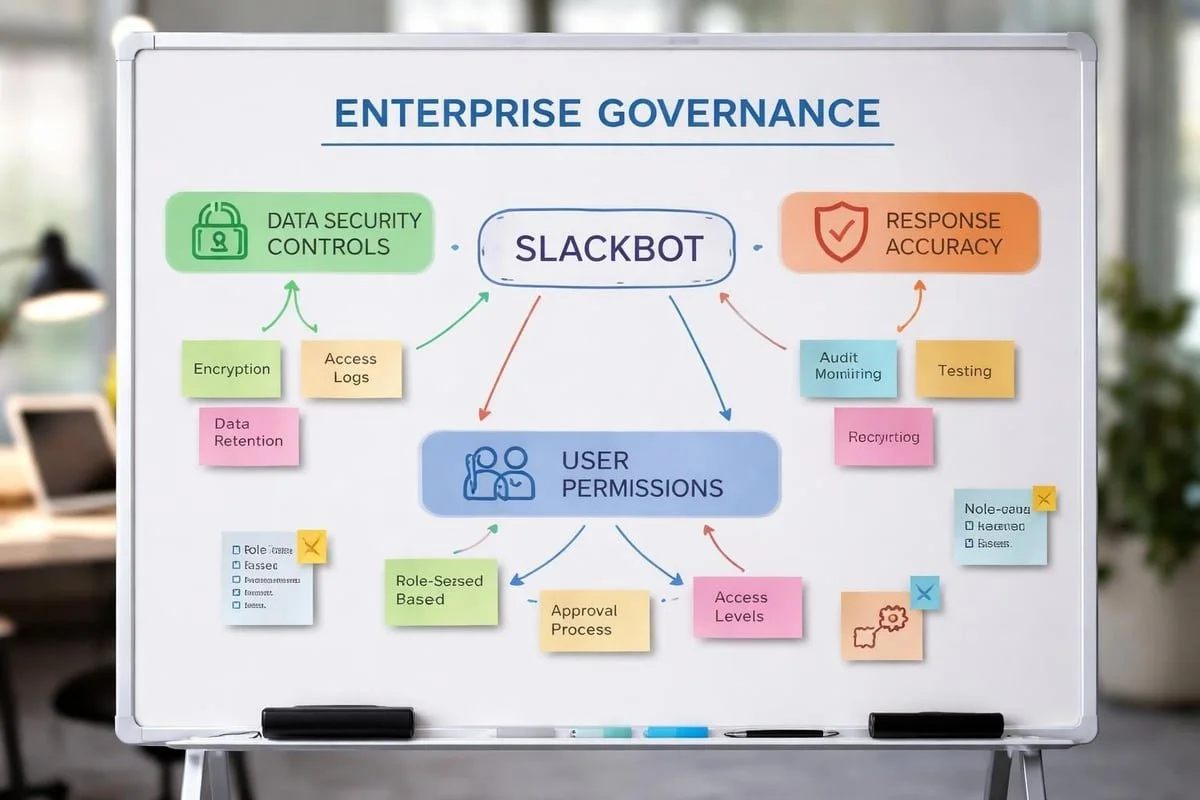
Successful adoption also requires addressing common concerns around AI implementation. Organisations benefit from transparent communication about how Slackbot uses data, what decisions it can make autonomously, and when human intervention remains necessary. This transparency builds trust and encourages appropriate usage across teams.
Measuring Impact and ROI
Quantifying Slackbot's value demonstrates its contribution to business objectives and justifies continued investment. Forward-thinking organisations establish baseline metrics before implementation, enabling clear before-and-after comparisons.
Key Performance Indicators:
Average response time to common queries
Reduction in support ticket volume
Time saved on routine administrative tasks
User adoption rates across departments
Integration accuracy with Salesforce data
Regular measurement allows continuous improvement, ensuring Slackbot evolves alongside changing business needs. This iterative approach mirrors the principles behind strategic Salesforce implementation decisions, where ongoing optimisation delivers compounding returns over time.
Teams should review analytics monthly to identify patterns in user behaviour and adjust automations accordingly. This data-driven approach transforms Slackbot from a static tool into a dynamic asset that grows more valuable with usage.
Slackbot represents a powerful opportunity for organisations seeking to enhance productivity whilst maintaining seamless integration with their Salesforce environments. By combining intelligent automation with thoughtful implementation strategies, businesses can create communication ecosystems that drive measurable results.
capeMBX Consulting specialises in helping organisations optimise their Salesforce platforms with AI-ready solutions, employing proven methodologies to ensure sustainable success and a competitive advantage across their digital infrastructure.
