

Implementing Salesforce in Financial Services (2026)
Customers expect financial services to be fast, connected and personalised. The reality behind the scenes can be very different. Disconnected systems, fragmented customer data, manual processes and complex governance make even seemingly simple changes difficult to deliver. Add the pressure to adopt AI and automation, and many firms are discovering that their biggest challenge isn't access to new technology. It's whether their existing foundations are ready for it.
Understanding the Financial Services Landscape
The financial sector operates under a distinctive set of pressures that shape every technology decision. Regulatory bodies worldwide demand comprehensive audit trails, data sovereignty, and robust security frameworks. Institutions must navigate frameworks including GLBA, GDPR, and the Digital Operational Resilience Act (DORA), all whilst delivering seamless customer experiences.
When implementing Salesforce in financial services, these considerations aren't optional add-ons. They form the foundation of every configuration decision, integration point, and data model. Salesforce's financial-services-specific privacy and compliance framework provides essential guidance on meeting regional requirements and maintaining regulatory standards throughout the implementation lifecycle.
Key Compliance Requirements
Modern financial institutions must embed compliance into their Salesforce architecture from day one. Process Compliance Navigator offers AI-assisted controls that automate regulatory workflows and maintain audit readiness. The 2026 data sheet for Process Compliance Navigator details how financial firms can integrate these capabilities directly into their daily operations.

Compliance requirements include:
Data residency and sovereignty across jurisdictions
Encryption standards for data at rest and in transit
Access controls with role-based permissions and multi-factor authentication
Audit logging capturing all system interactions and data changes
Customer consent management aligned with privacy regulations
Planning Your Implementation Strategy
Successful implementations begin with thorough discovery and planning. The BEACON methodology prevents common pitfalls by establishing clear objectives, identifying stakeholders, and mapping current processes before configuration begins.
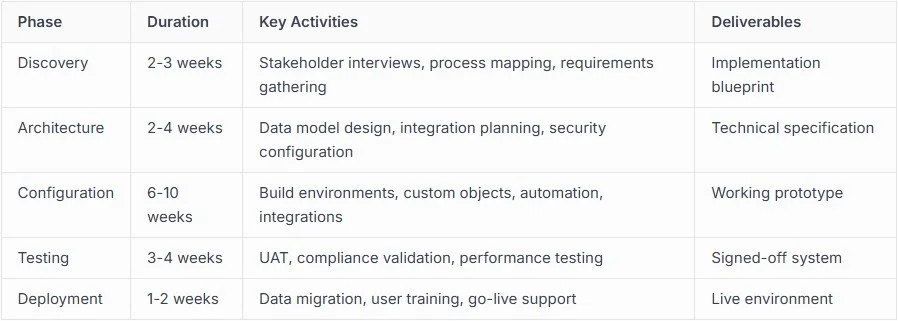
A structured timeline proves essential. Mid-market wealth-management firms typically require 16 to 24 weeks for a complete Financial Services Cloud rollout, with compliance embedded from the start rather than retrofitted after launch.
Implementation Phases
Addressing Common Implementation Challenges
Financial organisations encounter specific obstacles during Salesforce deployments. Several common challenges include data quality issues, legacy system integration, security concerns, and user adoption barriers.
Data quality represents perhaps the most significant hurdle. Financial institutions often maintain customer information across multiple systems, each with different formats and validation rules. Implementing Salesforce in financial services requires comprehensive data cleansing, deduplication, and enrichment before migration.
Integration Architecture
Legacy core banking systems rarely offer modern APIs. The financial services implementation playbook emphasises putting integration first, ensuring seamless connections between Salesforce and existing transaction platforms, portfolio management systems, and regulatory reporting tools.
Integration considerations:
Middleware platforms for real-time data synchronisation
API management for secure external connections
Event-driven architecture for transaction processing
Master data management across systems
Fallback mechanisms for system resilience

Building for Scale and AI-Readiness
Modern implementations must anticipate future requirements, particularly around artificial intelligence and automation. AI-ready Salesforce solutions require clean data architectures, standardised processes, and comprehensive metadata management.
Financial Services Cloud offers purpose-built objects for wealth management, banking, and insurance. Understanding how different Salesforce clouds modernise insurance operations provides valuable context for cross-industry implementations.
Data Architecture Best Practices
Clean, scalable data models form the foundation of successful implementations. Consider these principles:
Standardise naming conventions across all custom objects and fields
Implement data governance with clear ownership and stewardship
Design for reporting with analytics requirements in mind
Plan data retention aligned with regulatory requirements
Document everything including custom configurations and integrations
The guide to Salesforce CRM implementation services explores these principles in greater depth, with specific examples from financial services deployments.
Security and Trust Framework
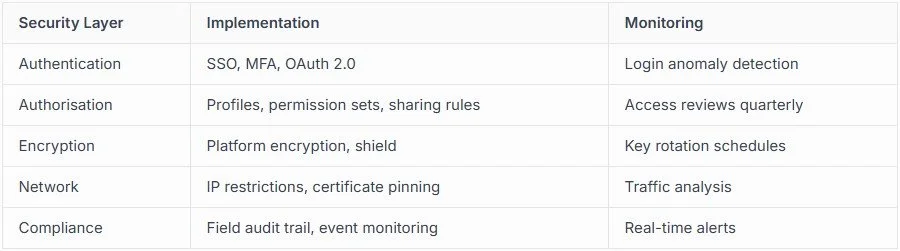
Security permeates every aspect of implementing Salesforce in financial services. Trust and compliance documentation provides current details about SPARC standards, infrastructure specifications, and sub-processor arrangements essential for meeting security requirements.

Driving User Adoption
Technology succeeds only when users embrace it. Financial advisers and relationship managers require intuitive interfaces that enhance rather than complicate their workflows. Creating teams that drive Salesforce success starts with comprehensive training and ongoing support.
Consider role-specific training paths, hands-on workshops, and executive sponsorship to build momentum. Salesforce learning resources for 2026 offer structured approaches to capability building across organisations.
Measuring Success
Define clear metrics before implementation begins. Track adoption rates, process efficiency improvements, customer satisfaction scores, and revenue impact. Regular reviews ensure the platform evolves with business needs.
Key performance indicators should include:
User login frequency and feature utilisation
Data quality scores measuring completeness and accuracy
Process cycle times for key workflows
Customer satisfaction metrics from surveys and NPS
Revenue per relationship manager or adviser
Successfully implementing Salesforce in financial services requires balancing regulatory compliance, technical complexity, and user needs whilst building for future innovation. The BEACON methodology employed by capeMBX ensures clean, scalable implementations that prevent common pitfalls and deliver sustainable value, transforming your Salesforce platform into a robust engine for growth whilst meeting the stringent requirements of financial services.
Frequently Asked Questions
How long does a typical Salesforce implementation take in financial services?
Most financial services implementations require 16 to 24 weeks for a complete Financial Services Cloud deployment, though timelines vary based on complexity, integration requirements, and organisational readiness.
What are the main compliance considerations for Salesforce in finance?
Key compliance areas include data residency and sovereignty, encryption standards, access controls, audit logging, customer consent management, and adherence to regulations such as GLBA, GDPR, and DORA.
How do you integrate Salesforce with legacy banking systems?
Integration typically requires middleware platforms for real-time synchronisation, API management for secure connections, and event-driven architecture for transaction processing, with fallback mechanisms ensuring resilience.
What makes Financial Services Cloud different from standard Salesforce?
Financial Services Cloud includes purpose-built data models for wealth management, banking, and insurance, with features specifically designed for relationship-based business models, household management, and financial planning workflows.
How can we ensure user adoption amongst financial advisers?
Successful adoption requires role-specific training, intuitive interface design, executive sponsorship, ongoing support resources, and regular feedback loops that allow users to shape system evolution to match their workflows.
