

Salesforce Agentforce Agents Explained: Meet Piper, Hunter, Casey and Paige
Salesforce is changing the way businesses think about AI agents. Instead of asking organisations to build every Agentforce use case from scratch, Salesforce has introduced a portfolio of job-ready Agentforce agents. Each arrives designed around a recognisable business role, with the skills, actions, and data model required to start doing that job.
Dreamforce 2026 saw the announcement of this new digital workforce. Among these new digital workforce are Piper, Hunter, Casey and Paige, four agents tackling very different jobs across sales, customer service and employee support.
The important distinction is what each one actually does.
Piper generates inbound pipeline. Hunter works outbound sales. Casey supports customers. Paige supports employees.
Here's how they work and where they could fit within your Salesforce environment.
What Are Salesforce's Job-Ready Agentforce Agents?
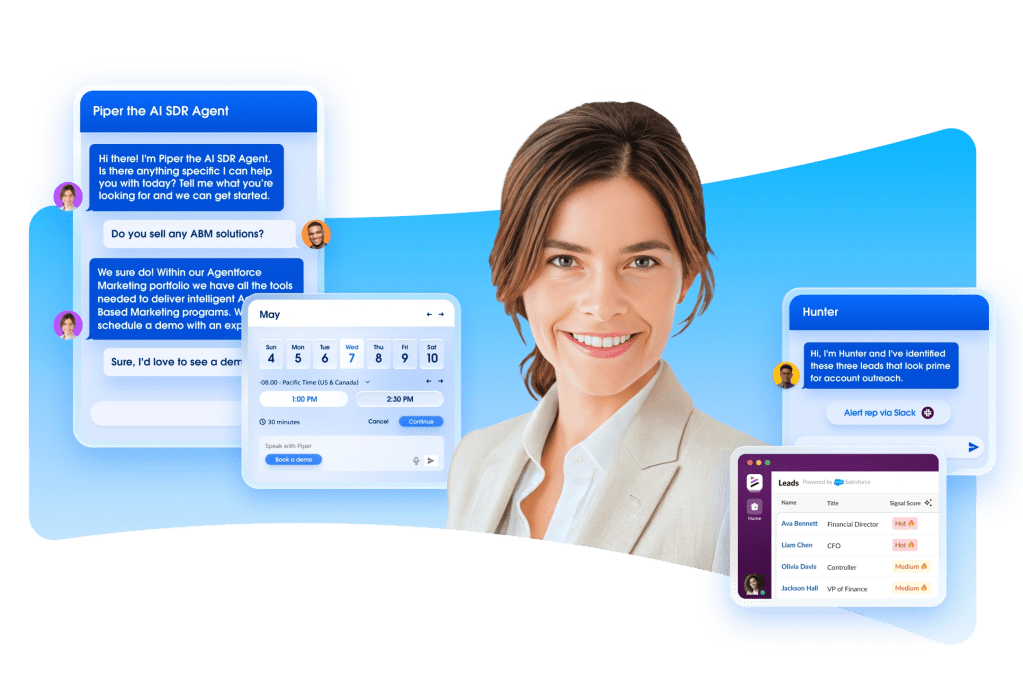
Salesforce's job-ready agents are prebuilt Agentforce solutions designed around specific business outcomes.
Rather than starting with a blank agent and defining every skill, action, and workflow, organisations can begin with an agent already designed for a particular job and then tailor it to their processes, data, and brand.
Salesforce's initial portfolio includes agents spanning sales, service, commerce, employee experience, and supply chain operations. Four demonstrate particularly clearly how Salesforce is dividing work between specialised AI agents:
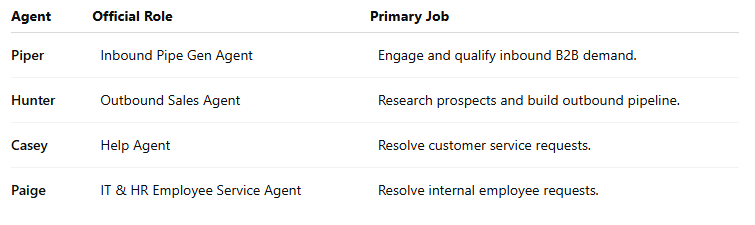
These aren't four versions of the same chatbot. Each is designed around a different job to be done.
Piper: The Inbound Pipe Gen Agent
Piper is Salesforce's inbound pipeline generation agent, designed to turn incoming B2B interest into qualified pipeline. Piper came to Salesforce through its acquisition of Qualified and works across websites and inboxes to engage prospective buyers, understand intent, qualify leads and move appropriate prospects towards conversion.
That means Piper sits at the inbound end of the sales and marketing funnel. A prospect visiting your website, for example, could interact with Piper before a salesperson ever becomes involved. Piper can use available customer and CRM context to determine how to engage that buyer, answer questions, qualify their interest and book an appropriate meeting.
For B2B teams, the job is straightforward:
Turn more existing demand into pipeline without requiring people to manually engage every inbound visitor or enquiry. This makes Piper particularly relevant when designing the best Salesforce setup for a B2B sales team, where speed-to-lead and effective qualification can have a direct impact on pipeline.
Salesforce says customers currently deploy Piper in an average of 45 days, while Asana has reported a fourfold increase in website conversation volume using the agent.
Hunter: The Outbound Sales Agent
If Piper works the inbound opportunity, Hunter focuses on outbound sales. Hunter is designed to work alongside sellers to research accounts, identify prospects, prepare outreach and pursue longer-term pipeline objectives.
The distinction matters. Piper responds to demand coming towards the business. Hunter goes looking for opportunities. Salesforce describes Hunter as capable of researching accounts, surfacing relevant prospects, drafting outreach, and building sales cadences for representatives to review and send.
But Hunter also introduces something more significant: long-horizon agentic work.
Hunter Can Work Towards a Goal Over Time
Hunter is the first Salesforce agent to use Agentforce's new long-horizon runtime. Instead of completing a single task and stopping, Hunter can pursue an objective across days or weeks. A sales leader might, for example, give Hunter a goal to help rescue at-risk opportunities before quarter end. Hunter can create a plan, determine what information and actions it needs, begin working through those tasks and adapt as new information becomes available.
Memory maintains context across sessions, durable execution keeps the plan moving, and dynamic steering allows sellers to redirect the agent when necessary. That moves Agentforce closer to an AI colleague working towards an outcome rather than an assistant responding to individual prompts.
For organisations considering Agentforce implementation and cost, this type of persistent work is an important development because it expands the potential scope of what an agent can own.
Casey: The Customer Help Agent
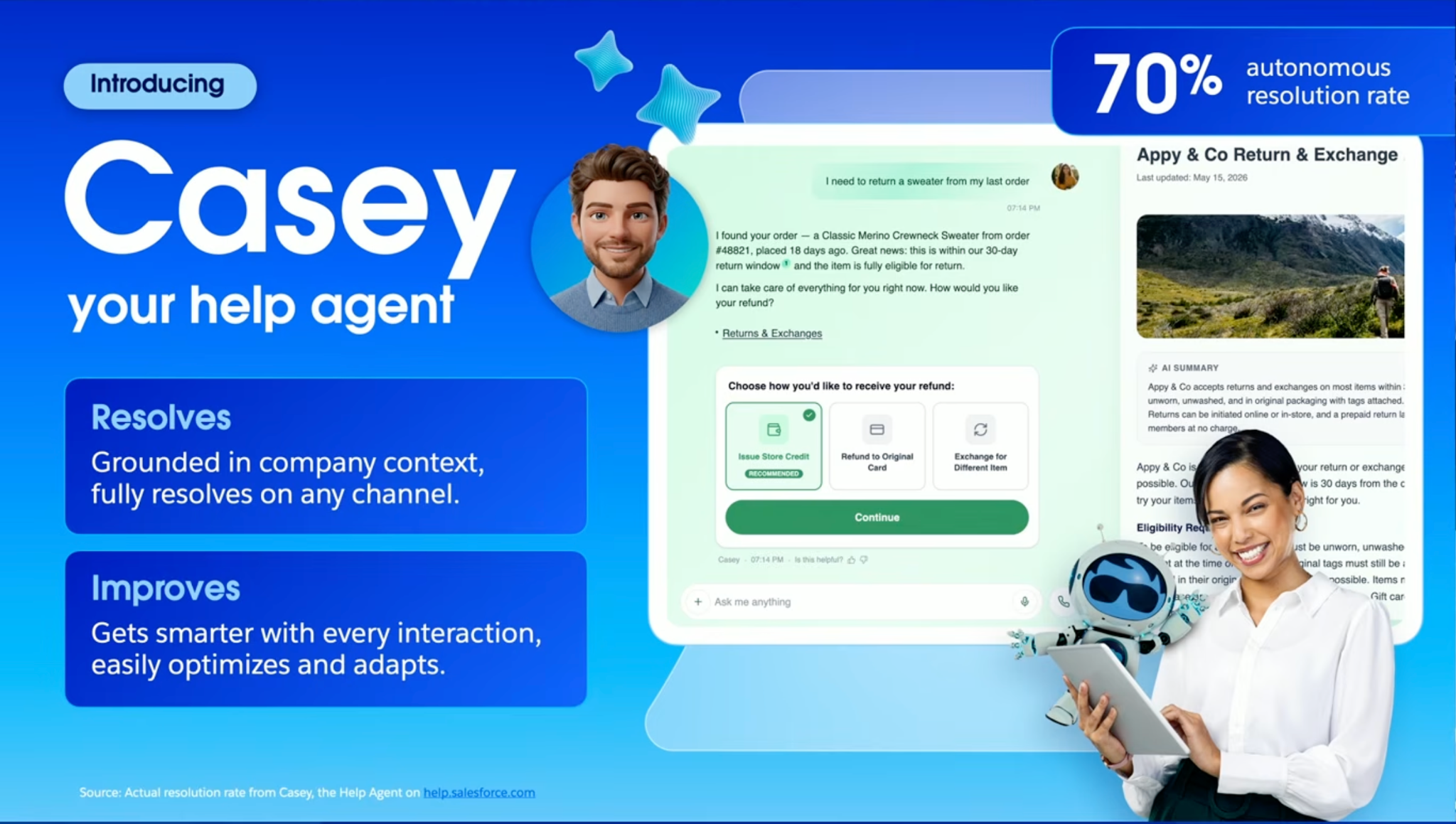
Casey is Salesforce's customer-facing Help Agent. This agent is designed to resolve customer requests across channels including voice, SMS, WhatsApp and web chat.
Its prebuilt capabilities include areas such as:
Answering frequently asked questions
Handling returns
Supporting account management requests
Resolving common service issues
Escalating customers to human representatives when required
For organisations already using Salesforce Service Cloud and Agentforce, Casey provides a more job-ready starting point for autonomous customer service.
The important concept is resolution, rather than simply answering questions. A traditional chatbot might retrieve a knowledge article telling a customer how a process works. An agent can potentially use Salesforce data and approved actions to help complete the underlying process.
When the situation exceeds its capabilities or defined permissions, Casey can hand the interaction to a person with the appropriate context.
Paige: The IT & HR Employee Service Agent
Where Casey supports customers, Paige supports employees. Paige is Salesforce's IT and HR Employee Service Agent, designed to resolve internal workforce requests through the channels employees already use, including Slack, portals and other workplace tools.
Think about the volume of repetitive questions handled by internal IT and HR teams:
"How do I reset my access?"
"Where can I find this policy?"
"How much annual leave do I have?"
"How do I request a new laptop?"
"What's the process for parental leave?"
Many of these requests follow established policies and processes but still require somebody to answer a ticket, find information or trigger an action.
Paige is designed to take on that work. The agent can interpret the employee's request, retrieve relevant information and use approved workflows to help resolve it, escalating when human intervention is necessary. Salesforce reports that Autism Queensland is already resolving 70% of administrative requests through its employee service agent.
The distinction between Paige and Casey is therefore simple:
Casey serves your customers. Paige serves your workforce.
What About Salesforce's Other Job-Ready Agents?
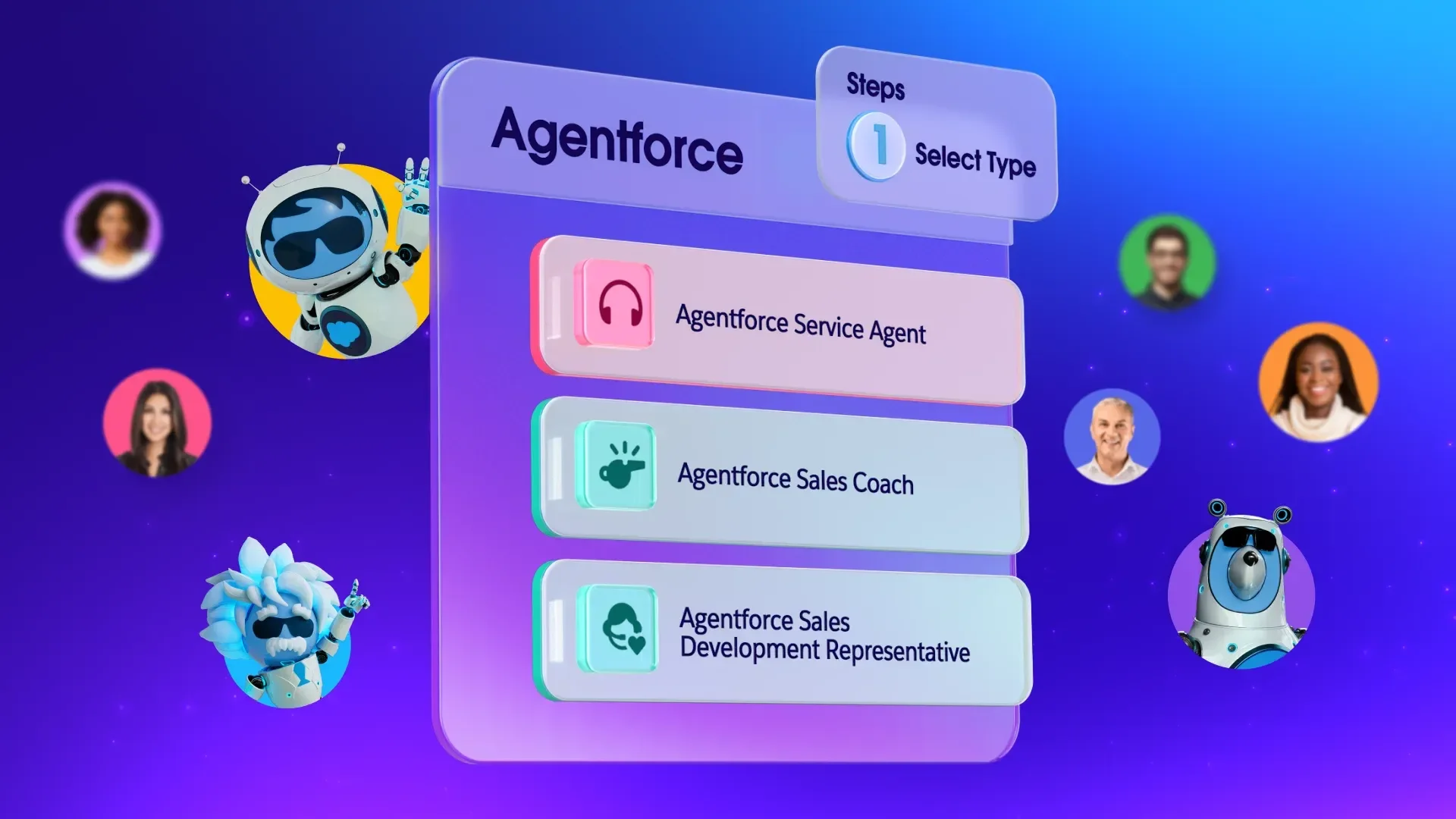
Piper, Hunter, Casey and Paige are only part of the new portfolio.
Salesforce has also introduced Carter, its Shopper Agent; Marshall, its Supply Chain Agent; and Fin, its Customer Agent (Fin – formerly Intercom – was recently acquired by Salesforce, and we’ll have a blog coming soon) for more complex customer-experience workflows.
This broader portfolio shows where Salesforce is taking Agentforce. Rather than expecting one general-purpose AI agent to understand every part of a business, specialised agents can own particular jobs and increasingly collaborate when work crosses functions.
Salesforce calls this Multi-Agent Orchestration, allowing work to be routed between specialised agents when a process requires different skills.
What Do These Agents Need from Your Salesforce Environment?
Job-ready does not mean plug-and-play.
The quality of an agent's work still depends heavily on the information, processes and permissions available to it.
Before deploying Agentforce, organisations should understand whether they have:
Reliable and appropriately structured Salesforce data
Clearly defined business processes
Appropriate user and agent permissions
Connected systems where additional context is required
Reliable knowledge content
Defined escalation and human-approval points
Measurable outcomes for the job the agent will perform
This is particularly important for organisations operating in regulated environments. Our guide to implementing Salesforce in financial services explores why data governance, permissions and architecture become critical when sensitive information is involved.
A job-ready agent can reduce the amount of configuration required to get started, but it cannot compensate for poor underlying processes or unreliable data.
How Should Businesses Measure Agentforce Success?
The right metrics depend on the agent.
For Piper - that might mean qualified inbound opportunities, meeting conversion, speed-to-lead and pipeline generated.
For Hunter - organisations could measure outbound pipeline, prospect engagement, seller time saved and progression of targeted opportunities.
For Casey - metrics might include autonomous resolution, escalation rates, resolution time and customer satisfaction.
For Paige - organisations could track employee request resolution, time-to-resolution, ticket deflection and the workload removed from IT and HR teams.
The principle is important: measure the business job, not simply how often the AI gets used.
High agent interaction volumes mean little if Piper isn't creating pipeline, Casey isn't resolving cases or Paige isn't reducing internal service workload.
How to Prepare for Salesforce's Job-Ready Agents
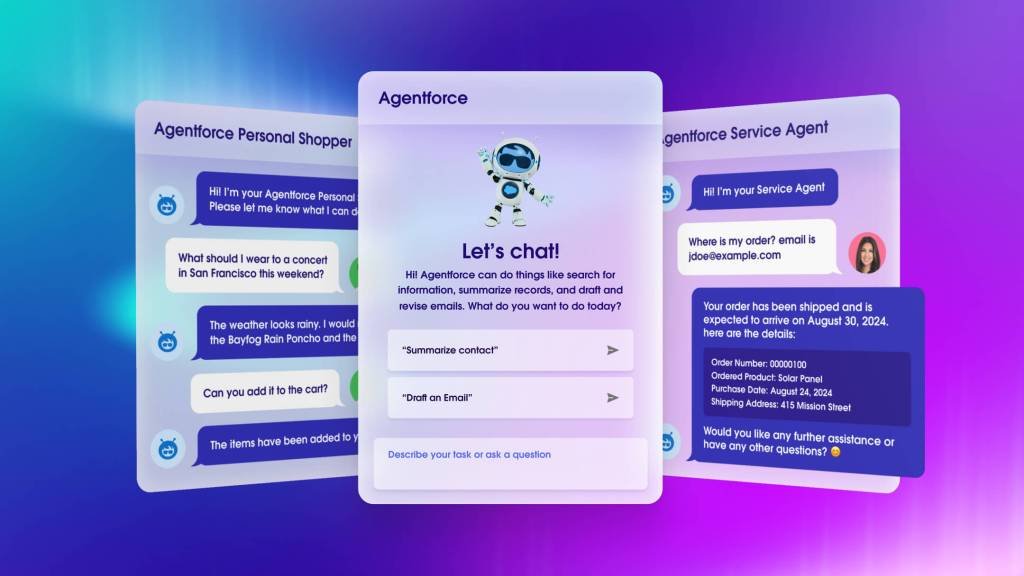
The arrival of these agents changes the starting point for an Agentforce project. Instead of beginning with "What AI agent should we build?", organisations can increasingly start with a more practical question:
Which jobs inside our organisation are good candidates for an agent?
From there, implementation should assess the current process, data quality, integrations, permissions, knowledge sources, human decision points and desired business outcome. For some organisations, a job-ready Salesforce agent may provide much of the required starting functionality. Others will need more tailored Agentforce solutions.
Either way, the foundations still matter. Clean, scalable Salesforce implementations become even more valuable when AI agents are expected to reason and act on the data they contain.
Frequently Asked Questions
What is Piper in Salesforce?
Piper is Salesforce's Inbound Pipe Gen Agent. It works across websites and inboxes to engage and qualify inbound B2B prospects and convert appropriate demand into sales pipeline.
What is Hunter in Salesforce?
Hunter is Salesforce's Outbound Sales Agent. It researches accounts and prospects, supports outreach and works alongside sellers towards longer-term pipeline objectives. Hunter is also the first Salesforce agent built on Agentforce's long-horizon runtime.
What is Casey in Salesforce?
Casey is Salesforce's Help Agent for customer service. It resolves customer requests across channels including voice, SMS, WhatsApp and web chat and can escalate interactions to human service representatives.
What is Paige in Salesforce?
Paige is Salesforce's IT and HR Employee Service Agent. It helps employees resolve internal IT, HR and administrative requests through workplace channels such as Slack and employee portals.
Are Piper, Hunter, Casey and Paige available now?
Availability differs by agent. Salesforce announced Casey, Paige and Piper as generally available in September 2026. Hunter was announced in pilot, with general availability planned for November 2026. Organisations should confirm current availability and licensing with Salesforce before making purchasing decisions.
From AI Assistants to a Digital Workforce
Piper, Hunter, Casey and Paige make Salesforce's direction increasingly clear.
The objective is no longer one AI assistant trying to help everybody with everything.
It is a digital workforce of specialised agents built around specific jobs: Piper creates inbound pipeline, Hunter pursues outbound pipeline, Casey resolves customer requests and Paige resolves employee requests.
The opportunity for businesses is significant, but deploying an agent should start with the job and desired outcome, not the technology.
These Salesforce agents represent a fundamental shift in how organisations leverage CRM platforms, moving from systems of record to autonomous business engines. Successfully implementing these agents requires more than technical configuration; it demands strategic planning around data quality, security governance, and user adoption.
capeMBX specialises in AI-ready Salesforce implementations. We help organisations identify practical Agentforce use cases, assess AI-readiness and build the Salesforce data, architecture and governance required to put agents into production safely.
Because the most important question isn't which agent sounds impressive. It's which job do you need it to do, and do correctly
